Curated brick set bundles are worth buying when you want a coherent build, clear instructions, and pieces that actually fit together. Mixed joblots win only on raw cost per piece. Curated bundles solve the two biggest bundle risks: parts that do not match and instructions that never arrive. Below, we break down three catalog picks, a buyer checklist, and what things really cost.
TL;DR:
- Curated bundles guarantee parts fit, include instructions, and offer themed builds, making them more reliable than raw joblots for finished projects or displays.
- Quality signals such as exclusives, electronic components, and documented set numbers add more value than just counting pieces, which can be misleading for pricing.
- Buyers should verify listing details, including set numbers, included instructions, condition, seller policies, and accurate piece counts before purchasing.
- Shipping costs, taxes, and import fees can significantly increase the total cost, so itemize these expenses to avoid surprises after purchase.
- Supporting curated bundles from trusted vendors ensures parts compatibility, clear instructions, and better resale value, especially for collectors focused on authenticity.
Table of Contents
- Catalog picks for play, display, and collecting
- When curated or custom bundles beat joblots
- What to check before buying any bundle
- Why piece count alone does not set the price
- What collectors should verify before they buy
- A simple step-by-step buying flow
- What a bundle really costs once shipping and fees are added
- Why our editorial team trusts curated bundles
- Shop curated bundles at Affordable Bricks
- Sources
- FAQ
Catalog picks for play, display, and collecting
Three curated bundles stand out for different goals, and knowing which one fits your priority saves you from buying the wrong style of set.
- Christmas Winter House 2198 suits display and gifting: it is a seasonal build with a cohesive theme, guaranteed piece compatibility, and instructions included, so it goes straight from the box to the shelf.
- M Tirith 11377 suits collectors and builders who want a large-scale centerpiece: it is a themed architectural build with detailed instructions, the kind of set people build once and keep displayed for years.
- Sand Vehicle 75220 suits readers with a vehicle or Technic interest: it is a compact build with moving parts, a good entry point if you want mechanical detail without committing to a huge kit.
Catalog bundles often ship with a compatibility guarantee, meaning every piece is checked to fit before it leaves the warehouse. That single detail addresses the most common complaint about off-brand brick sources: parts that almost fit, or do not fit at all.
Packaging usually follows standard set format, sealed where possible, with instructions included rather than sold separately. Shipping timelines vary by bundle size, but single-set orders typically move faster than large themed collections ordered together.
When curated or custom bundles beat joblots
The choice between a curated bundle and a mixed joblot comes down to what you actually want to do with the pieces.
- Curated bundles give you a coherent theme, checked part compatibility, and instructions you can follow start to finish.
- Mixed joblots, like this 200-piece bundle listing, offer the lowest cost per piece but rarely include instructions or a guarantee that anything matches.
Instructions change the math more than people expect. A joblot with 500 loose pieces and no diagram is a bag of parts. A curated bundle with 500 pieces and full instructions is a finished project waiting to happen. That gap is the real value difference, not the piece count on the label.
Pro Tip: If a listing says “assorted” or “mixed lot” anywhere in the title, assume no instructions and no guaranteed set completeness until the seller confirms otherwise.
What to check before buying any bundle
Before you click buy on any bundle listing, run through this short checklist.
- Look for explicit set numbers or copack documentation rather than vague “mixed lot” wording.
- Confirm whether instructions and parts inventories are included in the box or available to download.
- Check the condition: sealed and new, or used with a risk of missing elements.
- Verify the seller’s return policy and whether compatibility is guaranteed in writing.
- Compare the listed piece count against the actual build photos, when available, to spot gaps.
A listing that answers all five points upfront is doing the work most sellers skip. That transparency is usually the clearest sign you are buying from someone who stands behind the product.
Why piece count alone does not set the price
Cost per piece is a useful shorthand, but it breaks down fast once you compare bundles side by side. A joblot might beat a curated kit on price per brick while losing badly on build experience, since piece count is a weak standalone quality signal compared to build density, exclusive parts, and instruction clarity.
Higher-value signals worth paying for: Exclusive or hard-to-find parts, any electronics or motorized elements, a sealed set with a documented identity, and complete instructions all push value above what raw piece count suggests.

A quick example: a 500-piece mixed joblot with no instructions and a 500-piece curated kit with full documentation can carry very different price tags for the same brick count, because one is a finished project and the other is raw material.
Piece count versus build quality: custom bundle sellers commonly price in tiers built around roughly 50, 100, and 250-piece groupings, letting buyers match budget to project complexity rather than just chasing the lowest price per brick.
What collectors should verify before they buy
Collectors face a different set of risks than casual builders, mostly around resale value and authenticity.
Catalog records help here. BrickLink’s copack listings show how a documented bundle lists its constituent set numbers, release year, and weight, which is exactly the metadata a buyer needs to confirm a bundle is what the seller claims. A sealed copack with an original set number tied to it holds resale value far better than an unlabeled mixed bag.
A bundle’s identity, its release year, constituent set numbers, and original packaging, counts as a separate value driver from raw piece count.
Ask sellers for photos of the box, the seal, and any printed set numbers before you commit. Provenance is often the difference between a bundle worth reselling later and one that is just parts.
A simple step-by-step buying flow
Buying a bundle gets easier when you follow the same sequence every time.
- Decide your goal first: play, display, parts, or long-term collecting.
- Read the listing closely and request a parts inventory if one is not shown.
- Check the shipping method, packaging, and the seller’s return window.
- Complete the purchase through a secure storefront checkout.
- Inspect the build on arrival, starting with instructions and any loose or missing pieces.
That fifth step matters more than buyers expect. Checking instructions and completeness the day a bundle arrives gives you time to use a return policy before that window closes.
What a bundle really costs once shipping and fees are added
The sticker price on a bundle listing is rarely the full cost. Shipping adds up fast on large or heavy bundles, especially multi-set collections that weigh several pounds once boxed.
Sales tax applies at checkout depending on your state, the same as any online retail purchase. That part is predictable and shows up before you confirm your order.
Import fees are the piece buyers forget. If you are ordering from an overseas marketplace seller rather than a storefront based in your own country, customs duties or import taxes can apply on arrival, sometimes billed separately from the original purchase price. That risk mostly disappears when you buy from a storefront that ships domestically and lists a single, upfront price at checkout.
Before you commit to any bundle, add up the listed price, the shipping quote, and your local sales tax to get the real total. A bundle that looks cheaper on the surface can end up costing more than a curated kit once shipping and fees settle out. Reading the full checkout summary before you confirm an order is the simplest way to avoid a surprise charge later.

Why our editorial team trusts curated bundles
I write and review our catalog as the Affordable Bricks Editor, and every bundle we feature passes the same two checks: parts fit as promised, and instructions are included, not sold separately. Support does not stop at checkout. Discounts may be available for veterans and first responders, and returns processes tend to be straightforward if something is not right.
— Affordable Bricks Editor
Shop curated bundles at Affordable Bricks
Every bundle on our storefront meets the checklist above: real instructions, guaranteed compatibility, and a coherent theme instead of a mystery bag of parts. If you are shopping for a display piece, Christmas Winter House 2198 fits the holidays perfectly. Collectors looking for a centerpiece build should check out M Tirith 11377, and anyone who wants mechanical detail on a smaller scale will like Sand Vehicle 75220.
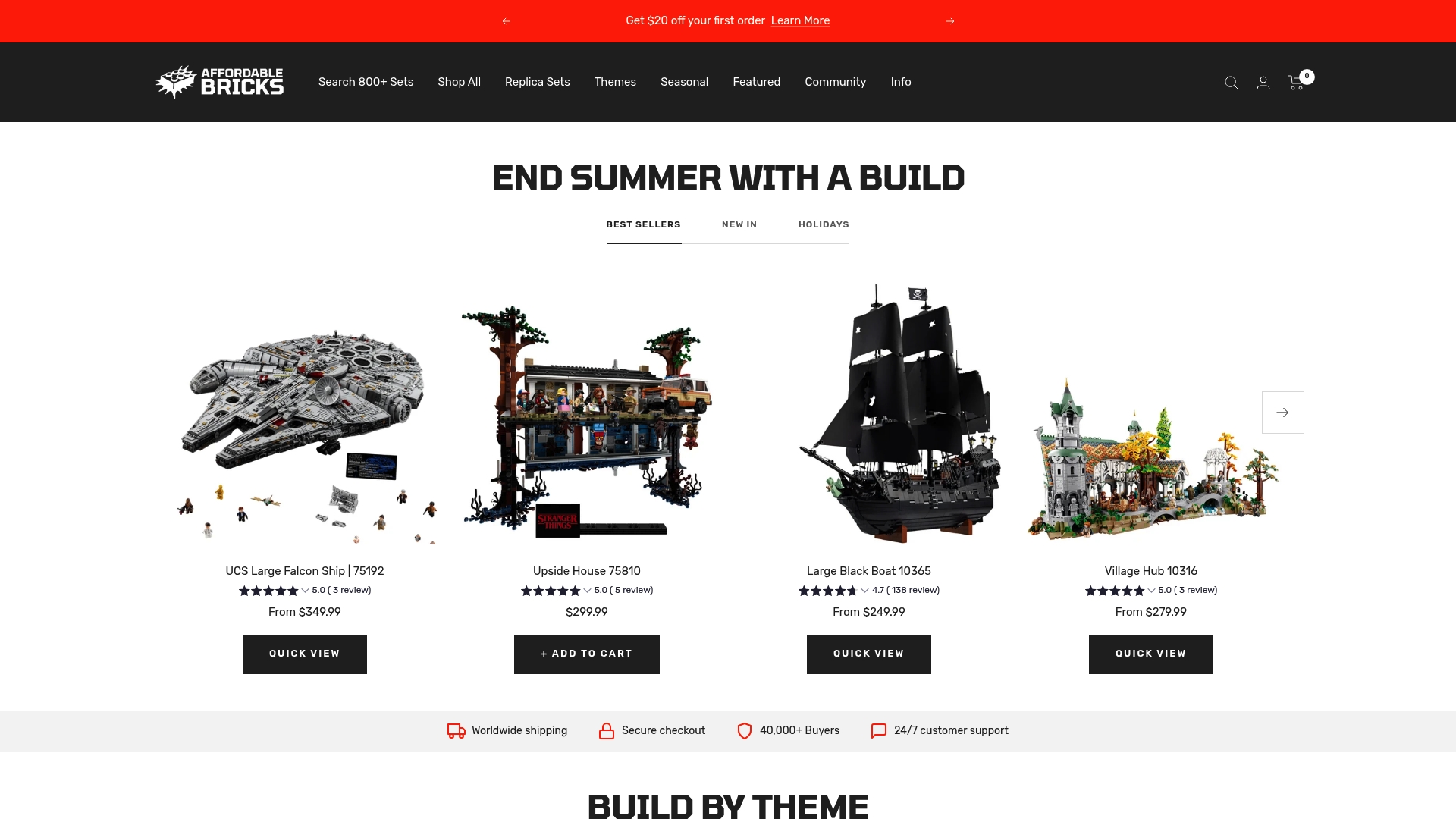
Military veterans and first responders may receive discounts, and support teams are generally available to assist with any issues regarding builds. Browse the full collection of curated bundles and find the set that matches your next build.
Sources
For readers who want to check bundle claims themselves, these sources cover the catalog and marketplace side of the market.
- City Bundle Pack, Super Pack (Copack of Sets 7242, 7733, 7990, and 7991) : Set 66256-1 | BrickLink
- 200 LEGO BRICKS BUNDLE JOBLOT
FAQ
Is it cheaper to buy LEGO sets brick by brick?
Buying individual bricks one at a time is almost never cheaper than buying a set or bundle, since sets bundle instructions and exclusive parts into one price. Mixed joblots can beat sets on raw cost per piece, but they typically skip instructions and any completeness guarantee.
What is the LEGO five two rule?
This term is not a recognized or documented LEGO or industry standard, so there is no reliable definition to point to. If you have seen it referenced elsewhere, treat it as informal shorthand rather than an official building or buying guideline.
How much should a 500-piece LEGO set cost?
Pricing for a 500-piece set depends heavily on whether it includes exclusive parts, motorized elements, or full instructions, not just the piece count. Piece count alone is a weak quality signal, so compare build complexity and included documentation before judging a price by piece count alone.
What is the cheapest set with a smart brick?
This depends on current catalog availability and changes too often to state a fixed answer here. Check a specialist storefront’s current listings directly to see which motorized or “smart brick” sets are priced lowest at any given time.