Yes, LEGO flower sets are worth it for most adults who want low-maintenance decor or a thoughtful gift, with real qualifications. Botanical sets typically retail between $49.99 and $59.99, take one to three hours to build, and hold up in reviews as reliable, good-looking display pieces. They suit gift-buyers and relaxed builders far better than anyone chasing resale profit.
TL;DR:
- LEGO botanical sets are priced between $49.99 and $59.99, with build times from 20 minutes for small stems to two hours for full bouquets.
- The sets do not include vases, so buyers need to provide suitable containers, and stems are fragile and prone to snapping.
- Construction involves repetitive assembly of nearly identical small parts, making the process relaxing for some and tedious for others, especially after several stems.
- These sets are a cost-effective, maintenance-free alternative to real flowers, with durability and display flexibility that lasts for years.
- They are best suited for gift-givers, adults seeking low-maintenance decor, or small-space owners, but are less ideal for resale investment or if the build experience bores you.
Table of Contents
- Are LEGO Flowers Worth It? Pros and Cons From Real Reviews
- What Does Building a LEGO Flower Set Actually Feel Like?
- How Do You Display LEGO Flowers Without a Vase?
- Is the Price of LEGO Flowers Actually Worth It?
- Who Should Buy LEGO Flowers (and Who Should Skip Them)?
- Why Affordable Bricks Is a Smart Way to Buy Decorative Sets
- LEGO Flowers vs. Other Decor in the Same Price Range
- Are LEGO Flowers a Sustainable Choice?
- The Honest Editorial Take on LEGO Flowers
- Get a Decorative LEGO Set Without the Markup
- Sources
- FAQ
Are LEGO Flowers Worth It? Pros and Cons From Real Reviews
Community feedback on LEGO’s Botanicals line is remarkably consistent, and that consistency is what makes the verdict easy to trust. Reviewers keep landing on the same short list of wins and the same short list of gripes, set after set.
On the plus side, a finished bouquet never wilts, never needs watering, and never leaves pollen on the table. Reviewers treat botanical sets as safe, low-risk gifts precisely because the finished builds look intentional and get displayed rather than tossed in a drawer. The build itself is approachable, no advanced LEGO technique required, and you can arrange the stems however fits your space.
On the downside, the assembly gets repetitive. The Flower Bouquet set (10280) runs 756 pieces at a $59.99 RRP and takes roughly two hours to build, and reviewers flag the leaf and petal steps as fiddly rather than fun by the third or fourth stem. No Botanicals set ships with a vase, which catches a lot of first-time buyers off guard. The stems are more fragile than they look, and dust collects in the studs faster than most owners expect.
Pros:
- Lasts indefinitely with basic dusting, unlike fresh flowers that die within a week
- Cost holds up well against repeat bouquet purchases over a year
- Approachable build, no technical LEGO experience needed
- Flexible display options since stems can be rearranged or trimmed to fit a vase
Cons:
- Repetitive petal and leaf assembly gets tedious past the first few stems
- No vase included in any Botanicals set
- Stems and petals are fragile and prone to snapping under pressure
- Secondary-market resale value is inconsistent and not something to count on
What Does Building a LEGO Flower Set Actually Feel Like?
Botanical sets are built around one design philosophy: looks over mechanics. There’s no motor, no complex linkage, nothing resembling a Technic gearbox. Instead, you’re assembling dozens of nearly identical small subassemblies, one petal, one leaf, one stem segment at a time, and repeating that pattern until a bouquet takes shape.
That repetition is the entire experience, for better and worse. It’s genuinely relaxing if you’re in the mood for something meditative. It gets tedious if you’re expecting variety step to step. Because these kits are designed for display rather than technical building, they stay approachable for adult beginners who’ve never touched a LEGO set, but that same simplicity means little sense of progression beyond “one more stem done.”
Build time scales with stem count more than complexity:
- Small single-stem kits: 20 to 40 minutes, good for a first-timer or a quick gift build
- Mid-size bouquets (around 500 pieces): 60 to 90 minutes
- Full bouquets like the Flower Bouquet or Pretty Pink Flower Bouquet: roughly two hours, given the 749-piece count and adjustable stem design of set 10342
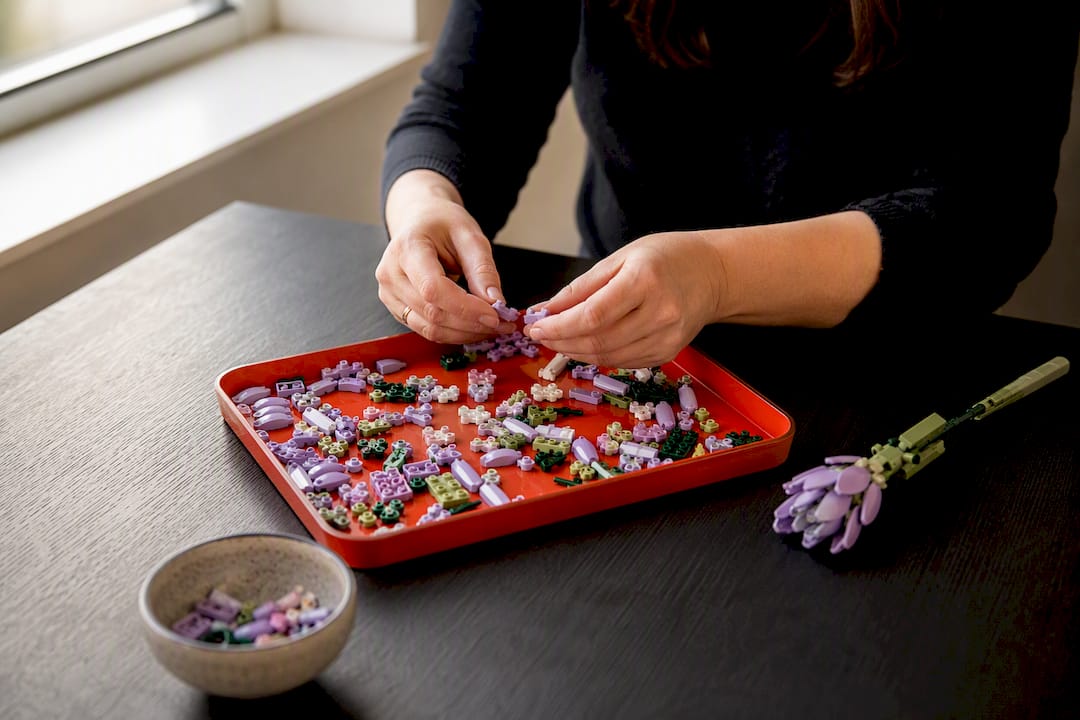
Sort pieces by color and part type before you start. Small trays or muffin tins work well, and good overhead lighting cuts down on the squinting that makes tiny stem pieces harder to place correctly.
Pro Tip: Build over a shallow tray or box lid. Botanical pieces are small enough to vanish into carpet, and finished stems are light enough to knock over if you’re reaching across a cluttered table.
How Do You Display LEGO Flowers Without a Vase?
Every Botanicals set ships stem-only, no vase, no water, no floral foam. That’s a deliberate design choice, but it does mean you’re solving a display problem the box doesn’t solve for you.
A clear glass vase with a narrow neck works best because it holds the stems upright without extra support. Wider vases usually need floral foam, dried moss, or decorative stones at the base to keep stems from sliding around. Reviewers who’ve lived with these builds for a while point out that the stems read as convincingly floral from across a room but reveal their brick construction the moment you get close, so vase placement on a sideboard or entry table tends to work better than a coffee table where guests get an up-close look.
Maintenance is simple but not zero. A few practical habits keep a bouquet looking sharp:
- Dust weekly with a soft brush or microfiber cloth; a quick pass with gentle compressed air handles tight gaps between petals
- Keep the arrangement on low-traffic surfaces, away from pets that might chew loose petals or kids reaching for bright colors
- Use clear museum putty or a small silicone pad under the vase base if the surface isn’t perfectly level
- Store disassembled stems in a shallow box, not loose in a drawer, if you’re rotating decor seasonally
Check out three practical ways to display a finished set if you want more arrangement ideas beyond a basic vase.
Is the Price of LEGO Flowers Actually Worth It?
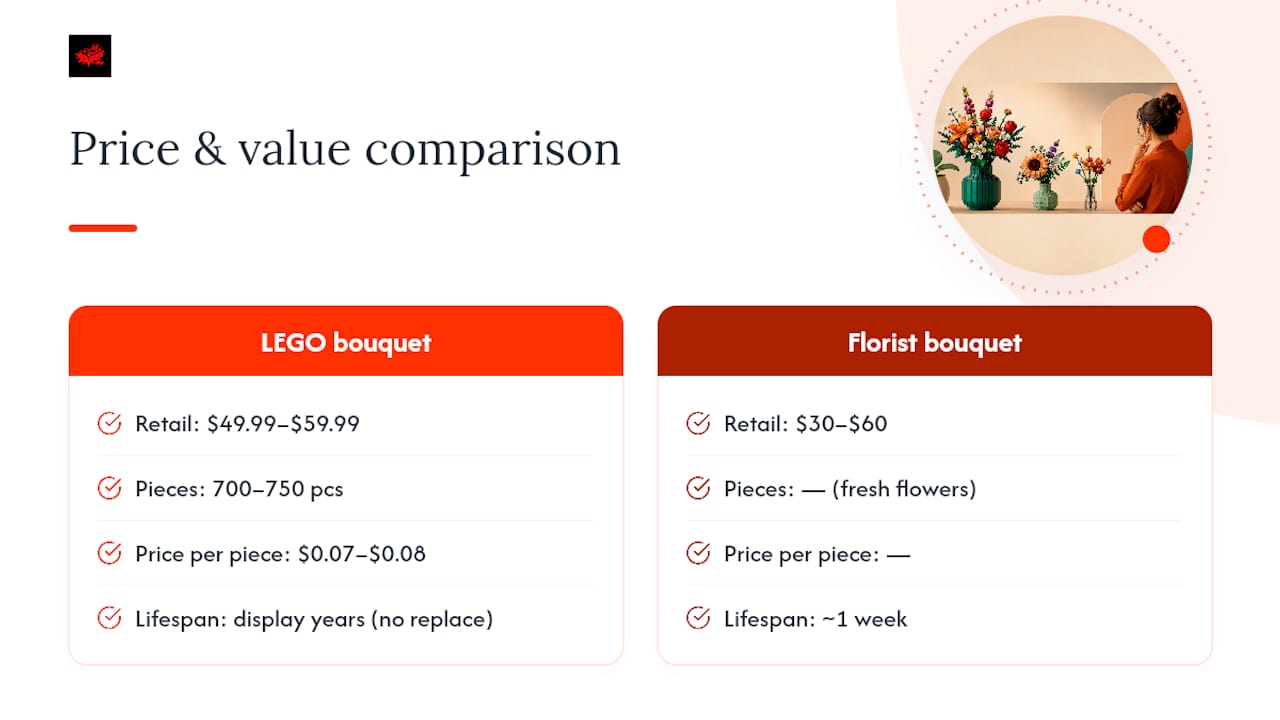
Botanicals sets sit in a tight retail band, typically $49.99 to $59.99, which works out to roughly $0.07 to $0.08 per piece on a 700 to 750 piece bouquet. That’s a fair price-per-piece for LEGO’s standard sets, and it puts a bouquet in the same range as a nice grocery-store floral arrangement, except this one doesn’t need replacing next week.
Compare that to real flowers honestly. A decent bouquet from a florist runs $30 to $60 and lasts maybe a week before its compost. Buy one every two weeks for a year and you’re well past $700, versus a single $50 to $60 LEGO purchase that looks the same on your shelf five years from now. That’s the actual value case, not resale, just avoided repeat spending.
Resale reality check: Price-tracking data shows the original Flower Bouquet (10280) declined roughly 44.2% from its RRP after retirement, and secondary-market prices across the Botanicals line have varied widely since. Some sets hold value after being pulled from shelves; others don’t.
Set-specific examples reinforce that unpredictability. Listings for the Wildflower Bouquet (10313) show a broad range of sale prices on the secondary market, with no clean upward trend you could bank on. If you’re buying purely for enjoyment and display, current retail pricing is a fair deal. If you’re buying because you’ve heard LEGO sets appreciate, botanical sets are one of the weaker categories to bet on unless you’re already tracking collectible trends closely.
Who Should Buy LEGO Flowers (and Who Should Skip Them)?
Botanical sets fit a specific kind of buyer well, and they’re a poor match for a different kind. Running through a short checklist before you order saves you the disappointment of a set that doesn’t fit your actual habits.
Best for:
- Gift-givers who want something that won’t wilt, get thrown out, or trigger allergies
- Anyone who’s killed one too many houseplants and wants greenery without the guilt
- Adults looking for a relaxing, low-stakes build after a long day
- Renters or small-space owners who want decor that doesn’t need watering, repotting, or sunlight
Skip if:
- You’re buying primarily for investment or resale upside
- Repetitive, similar-feeling build steps genuinely bore you
- You have young kids or pets who’ll treat loose petals as chew toys
- You don’t have a vase on hand and don’t want to shop for one separately
Before you check out, ask yourself four quick questions: how much build time do you actually have this weekend, where exactly will the finished piece sit, what’s your real budget ceiling, and do you already own a vase that’ll work.
Why Affordable Bricks Is a Smart Way to Buy Decorative Sets
Affordable Bricks is an online retailer of quality LEGO-compatible sets, offering options without collectible-market markups. The store provides building instructions and aims to ensure compatibility so pieces fit together properly.
If you’re shopping for a decorative build in the same spirit as a botanical bouquet, browse the Roses Bouquet set for a ready-made floral option, or look at the Christmas Winter House if you want seasonal decor instead of flowers. For something with more character, the Ogre and Friends set shows the range Affordable Bricks carries beyond botanicals. Discounts are available for military members and first responders.
Match your set to your actual decor plan, not the flashiest box art, and you’ll get more consistent enjoyment out of the build and the display both.
LEGO Flowers vs. Other Decor in the Same Price Range
A $50 to $60 budget for home decor stretches across a lot of options besides LEGO Botanicals, and the comparison matters if you’re weighing this purchase against alternatives.
A framed print or a small piece of wall art in that price range gives you permanent visual interest with zero assembly required, but it doesn’t offer the hands-on, relaxing build time a bouquet does. Artificial silk flower arrangements land in a similar price bracket and skip the build entirely, though they generally look less deliberate up close and lack the tactile, structured appeal reviewers praise in LEGO’s version. A mid-size succulent or houseplant costs less upfront but demands ongoing care, water, light, and the real risk of dying, which is exactly the maintenance burden a lot of Botanicals buyers are trying to avoid.
Against other LEGO sets in the same price bracket, botanical kits stand apart because they’re built specifically for permanent display rather than shelf storage after completion. A $55 vehicle or building set from Affordable Bricks’ vehicle collection gives you a more involved build with visible mechanical detail, but it doesn’t double as living-room decor the way a bouquet does. If display value matters as much as build enjoyment, botanicals win that specific comparison. If you want a bigger technical challenge for the same money, a vehicle or architecture set is the better fit.
Are LEGO Flowers a Sustainable Choice?
LEGO Botanicals sets are made from the same ABS plastic as standard LEGO pieces, not a biodegradable or plant-based material, despite the floral subject matter. That’s worth knowing if sustainability is part of your buying decision, since the “flower” framing can create a misleading impression of eco-friendliness.
Where they do offer a real environmental upside is in longevity. A plastic bouquet that lasts years replaces what would otherwise be a recurring stream of cut flowers, each grown, refrigerated, shipped, and discarded within days. Repeated bouquet purchases carry a real cumulative footprint, water use, floral preservatives, transportation, that a single durable LEGO build avoids entirely after the first purchase.
The trade-off is upfront manufacturing impact versus ongoing consumption impact. One plastic set produced once, used for years, and eventually recyclable through LEGO’s own piece-return programs generally beats a pattern of biweekly bouquet purchases on a pure waste-reduction basis. It’s not a zero-impact purchase, but it’s a lower-impact one than most people assume when they hear “plastic flowers” and picture landfill clutter instead of a shelf decoration that outlasts a decade of real bouquets.
The Honest Editorial Take on LEGO Flowers
The conventional wisdom on LEGO flowers splits into two extremes: either they’re dismissed as overpriced plastic knickknacks, or they’re hyped as guaranteed collectible gold. Neither holds up under scrutiny. The research supports a much plainer conclusion: these are decor purchases, not investments, and treating them as either better or worse than that undersells what they actually deliver.
What gets overlooked most often is the maintenance math. People fixate on the $50 to $60 sticker price and skip the comparison that actually matters, what you’d spend on fresh flowers over the same stretch of time. Run that math honestly and the value case gets a lot stronger than most reviews bother to point out.
Prioritize fit overhype. Buy a set because it matches your space and your patience for repetitive building, not because a forum thread claimed it’ll be worth triple in five years. If a display-first build with a fit guarantee and honest pricing sounds right, Affordable Bricks’ catalog is a reasonable place to start looking.
— Affordable Bricks Editor
Get a Decorative LEGO Set Without the Markup
Affordable Bricks exists for exactly the reader who just weighed a $50 to $60 botanical bouquet against a decade of avoided flower purchases and decided the math works. Affordable Bricks offers premium LEGO-compatible sets at a fraction of the markup you’ll see on collectible resale sites, backed by detailed building instructions and a guarantee that every piece fits the way it should.

Browse the Roses Bouquet for a floral option built the way this article describes, or explore the full seasonal and themed catalog if you want decor beyond flowers. Military members and first responders get a discount at checkout on every order. Pick a set that fits your shelf, your budget, and your patience for small pieces, then place the order and start building this weekend.
Sources
This article draws on reviewer builds, official set data, and secondary-market price tracking to keep the verdict grounded in real numbers rather than marketing copy.
GamesRadar+'s Flower Bouquet review supplied piece counts, build time, and vase-related frustrations. Brick Ranker’s price history tracked post-retirement resale trends. MazeBe’s Wildflower Bouquet review and Brothers Brick’s Flower Bouquet review added build impressions and display context. BrickEconomy’s set data confirmed piece counts and pricing for newer Botanicals releases.
- Lego Flower Bouquet review | GamesRadar+
- LEGO Wildflower Bouquet 10313 review | MazeBe
- LEGO Botanicals Pretty Pink Flower Bouquet (10342) - BrickEconomy
- LEGO 10280 Flower Bouquet review — Brothers Brick
FAQ
How Long Do LEGO Flowers Last?
Indefinitely, with basic care. Unlike real flowers, a finished LEGO bouquet doesn’t wilt or decay. It just needs occasional dusting, roughly weekly with a soft brush or gentle compressed air, to stay looking sharp.
Why Are LEGO Flowers So Expensive?
Botanical sets run $49.99 to $59.99 because they use a high piece count for detailed, layered stems and petals, not because of rarity or hype. At that price and piece count, the cost-per-piece lands in line with LEGO’s standard sets, and it’s still cheaper than a year of repeat fresh-flower purchases.
Are LEGO Flowers Being Discontinued?
LEGO regularly retires individual sets within the Botanicals line as it introduces new designs, which is standard practice across most LEGO themes, not a signal the category itself is ending. Once a set retires, secondary-market prices can shift significantly, sometimes dropping well below RRP rather than climbing.
What Is the Rarest LEGO Flower Set?
Rarity in the Botanicals line depends on which sets have been retired longest and how limited their original production run was, and that shifts over time as new sets launch and older ones disappear from shelves. Price-tracking sites are the most reliable way to check current scarcity and resale value for a specific set rather than relying on a fixed “rarest” label.
Are LEGO Flower Sets a Good Gift?
Yes, reviewers consistently call them safe, reliable gifts because the finished build is decorative and rarely goes unused or returned. They work especially well for recipients who don’t garden, have plant allergies, or just want something that looks intentional on a shelf without upkeep.