The fastest, least-frustrating LEGO storage is a shape-first system that pairs clear shallow drawers for small parts with stackable bulk bins and a dedicated display for finished sets. Prioritize small-drawer cabinets, stackable totes, and a couple of display pieces before anything else. That combination scales whether you have one bin or a whole shelving unit.
TL;DR:
- Small-drawer cabinets are essential for tiny parts and allow quick visual identification, especially useful for frequent searches during building sessions.
- Sorting LEGO by shape rather than color speeds up the retrieval process and reduces frustration when assembling specific pieces.
- The appropriate storage setup depends on collection size and user age, with individual drawers for small parts and larger bins or wall units for bigger collections.
- Protecting bricks from sunlight, humidity, and dust prolongs their lifespan and maintains their appearance and structural integrity.
- Budget storage options like food tubs, upcycled containers, and dollar-store bins work well for beginners, but upgrading to sturdier furniture benefits larger collections.
Table of Contents
- Brick Storage Ideas: The Container Types That Actually Work
- How to Sort LEGO Bricks by Shape, Not Just Color
- Matching LEGO Storage Solutions to Your Collection Size
- Displaying Built Sets Without Damaging the Plastic
- Budget and DIY Brick Storage Ideas That Actually Hold Up
- Affordable Bricks’ Tested Storage Setups
- Maintenance Tips to Keep Bricks Dust-Free
- Editor Perspective on Balancing Display and Function
- Display Pieces From Affordable Bricks That Complement Your Setup
- Sources
- FAQ
Brick Storage Ideas: The Container Types That Actually Work
Before you buy anything, match the container to the job. Most collections end up needing three or four categories working together, not one giant bin that swallows everything.
- Small-drawer cabinets (Akro-Mils style) are built for tiny elements like 1x1 plates, minifig accessories, and technic pins. Each drawer is shallow enough to see the contents at a glance, which matters when you are hunting for one specific piece.
- Stackable bins (Sterilite and IRIS USA Stack & Pull are the two most recommended options) handle bulk bricks and plates. These stackable storage drawers are designed to lock together so a tower of bins does not topple when a kid yanks the bottom one out.
- Tackle boxes and craft organizers work well for portable builds. A latching tackle box with adjustable dividers travels to grandma’s house or a LEGO club meeting without spilling.
- Minifigure cases with individual compartments keep your figures from tangling with loose bricks, and they double as a display when propped on a shelf.
- Pegboards with hanging bins turn a wall into working storage. Mount a pegboard near your build table and clip on small bins for whatever set you are actively assembling.
- Display bricks, like the stackable Room Copenhagen line, let you showcase minifigures or small builds without dedicating a drawer to them.
Pro Tip: Buy one small-drawer cabinet before you buy five stackable bins. You will know almost immediately whether you need more drawer space or more bulk space, and starting small saves you from guessing wrong on a bigger purchase.
How to Sort LEGO Bricks by Shape, Not Just Color
Sorting by shape beats sorting by color for one simple reason: when you are mid-build, you are hunting for a “2x4 brick,” not a “blue piece.” A shape-organized sorting method puts pieces where your brain actually looks for them, which shaves real time off every build session.
A starter category matrix that works for most collections:
- Bricks (standard rectangular pieces, sorted loosely by size)
- Plates (flat pieces, including baseplates if you have room)
- Slopes and curves
- Technic pieces (beams, pins, gears, axles)
- Small parts (clips, hinges, 1x1 pieces, minifig accessories)
- Transparent and botanical pieces (windows, leaves, flowers)
- Minifigures and accessories
Label each drawer with picture labels for young builders and short text labels for adults, placed directly on the drawer front where they are visible without opening anything. Start broad, then split categories only when a drawer gets too crowded to scan quickly. You do not need seven perfect categories on day one. Add a category when frustration tells you to, not before.
Matching LEGO Storage Solutions to Your Collection Size
The right setup depends less on how many bricks you own and more on who is using them. Here is what fits each stage.
- Kids and families: Shallow tubs, TROFAST-style drawers, and a rollable play mat that cinches shut for quick cleanup. Skip anything deep and opaque. Visibility beats capacity when a seven-year-old is doing the sorting.
- Casual or growing collections: A mix of Sterilite or IRIS bins for bulk, plus a rolling cart near your build space. Three to five bins covering major categories is usually enough before you need a dedicated system.
- AFOL and large collections: Akro-Mils multi-drawer cabinets for small parts, Stack & Pull totes for bulk, and wall-mounted drawer units to keep floor space clear. This is where a modular, expandable setup pays off.
- Small-space strategies: Under-bed drawers, Kallax-style cube shelving with fabric bins, and a compact pegboard mounted inside a closet door.
Displaying Built Sets Without Damaging the Plastic
Floating shelves with baseplates mounted underneath give built models a stable, dust-resistant home. Shadowboxes and minifigure cases work well for smaller pieces you want visible but protected from handling.
The plastic itself needs protection too. ABS, the material most bricks are made from, can undergo photo-oxidative degradation from prolonged light exposure, meaning colors can fade and the plastic can become more brittle over years of direct sun. Rotate displayed sets out of direct sunlight, and consider UV-filtering glass for anything in a south-facing window. Keep humidity moderate and temperatures steady. For collectible sets, store the original box and instructions flat in a cool closet rather than stacked near a heat source like a radiator or garage wall.
Budget and DIY Brick Storage Ideas That Actually Hold Up
You do not need to spend a fortune to organize a growing collection. Dollar-store tilt bins, stackable cosmetic organizers, and washed food storage tubs all work for early sorting stages. Repurposed dumpling trays make surprisingly good minifig accessory sorters, and an old shoebox with cardboard dividers gets you through a weekend build.
- Dollar-store tilt bins: great for small parts, easy to swap out if they crack.
- Cosmetic organizers: shallow drawers perfect for slopes and technic pieces.
- Food storage tubs: solid for bulk bricks, though lids on cheap tubs warp over time.
- Shoeboxes with dividers: a free starting point for new sorters.
Builders on forums like r/LegoStorage report good results with upcycled containers, though some flag that ultra-cheap plastics get brittle and crack under stacking weight. Upgrade to Sterilite or Akro-Mils hardware once a bin starts flexing or splitting at the seams.
Pro Tip: Mount a row of dollar-store tilt bins to a scrap piece of plywood with wood screws through pre-drilled holes. It turns loose bins into a pegboard-style wall unit for almost no extra cost.
Affordable Bricks’ Tested Storage Setups
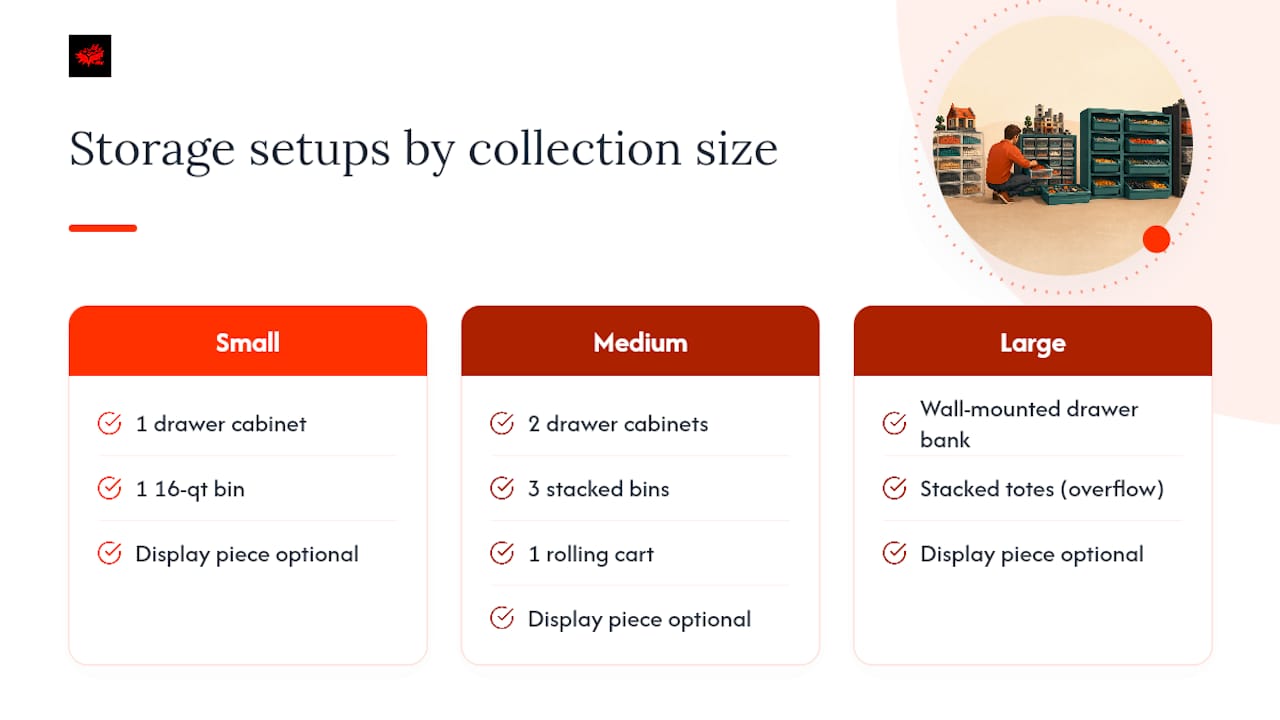
For a small collection, one Akro-Mils drawer cabinet plus a single 16-quart Sterilite bin covers most builders comfortably. Medium collections do well with two drawer cabinets, three stacked bins, and a rolling cart. Large, AFOL-scale collections need a wall-mounted drawer bank alongside stacked totes for overflow.
Display pieces round out any of these setups. The Shadowbox Cave 76252 works as a striking centerpiece that keeps a finished build dust-free without eating drawer space, and the compact Mystery Block Key Holder 3057 doubles as a small-parts catch near an entryway. For more display strategies, check the Affordable Bricks blog on displaying your sets.
Maintenance Tips to Keep Bricks Dust-Free
Dust is the quiet enemy of every brick collection. It settles into stud tops, dulls transparent pieces, and eventually needs a full wash cycle to remove. A few habits prevent that buildup before it starts.
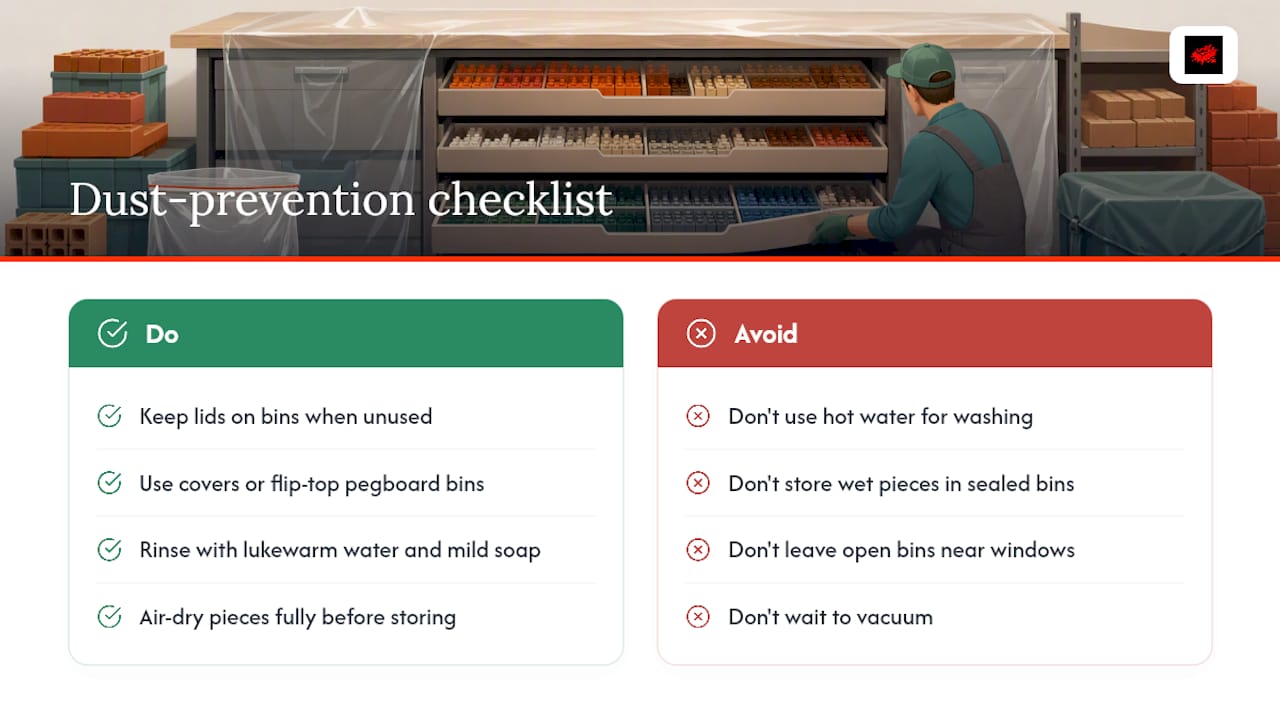
Keep lids on bins that are not in active use, especially bulk storage that sits for weeks between builds. Open bins in a workshop or garage collect dust fast, particularly near windows or vents. If you are working with a pegboard system, add small covers or flip-top bins rather than open trays.
For pieces that already need cleaning, a lukewarm water rinse with a mild dish soap works for most bricks. Skip hot water since warm-to-hot temperatures can warp thin pieces and loosen printed details on minifigures. Lay washed pieces on a towel to air dry completely before returning them to drawers, since trapped moisture invites mildew in sealed containers.
Wipe down cabinet drawers and bin lids every few months with a dry microfiber cloth. If you store bricks in a closet, a fitted closet organization system with sealed drawers cuts down on dust infiltration far more than open shelving does. Vacuum around storage units regularly rather than waiting until dust is visible on the bins themselves, since dust that settles on lids eventually works its way into seams and drawer tracks.
Editor Perspective on Balancing Display and Function
Working storage should live closest to where you build, and display should live wherever light and traffic allow it to be admired safely. Don’t chase a perfect system on day one. Every collection outgrows its first setup, and that’s fine. Adjust drawers, add bins, and keep refining as your shelf space changes.
— Affordable Bricks Editor
Display Pieces From Affordable Bricks That Complement Your Setup
Affordable Bricks builds sets for people who want quality LEGO-compatible pieces without paying collector markups, and that same value applies to display-storage hybrids. If your bulk bricks live in drawers but you want one shelf that looks intentional, these two pieces solve that without adding to your sorting workload.
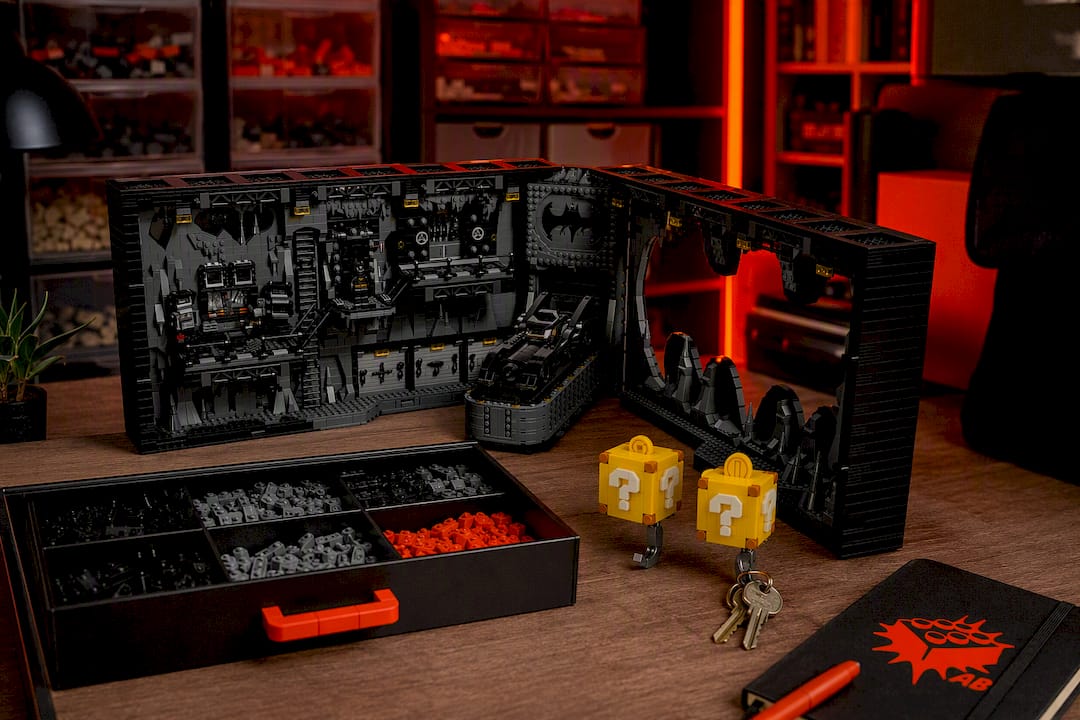
The Shadowbox Cave 76252 gives you a self-contained display box that keeps a finished build free of dust while showing it off, which is useful if you are tired of rebuilding the same set after it collects grime on an open shelf. The Mystery Block Key Holder 3057 is a smaller piece, ideal near a doorway for keys, small tools, or a couple of loose minifigures that would otherwise end up in a junk drawer. Both ship with the detailed instructions and piece-fit guarantee Affordable Bricks builds every set around, and military and first responder discounts apply at checkout. Browse the full collection of sets or check out the vehicle lineup if you’re planning a themed display shelf next.
Sources
The ABS photodegradation study explains sunlight risks to plastic bricks. The shape-sorting guide backs container recommendations. IKEA’s storage ideas cover pegboard and drawer furniture options.
- Photochemical ageing and conservation study on ABS (LEGO® example)
FAQ
What is the 5/2 rule in LEGO organization?
There is no single standardized “5/2 rule” in LEGO organization circles; the phrase shows up informally in different forums with different meanings. If you have seen it referenced, it likely describes a personal sorting shortcut rather than an established method, so a shape-first system remains the more reliable starting point.
What is the best way to organize LEGO bricks?
Sort by shape first, not color, since builders search for pieces by their function during a build. Pair shallow drawers for small parts with stackable bins for bulk bricks, following the shape-organized sorting approach that most hobbyist guides recommend.
Do LEGO bricks get brittle with age?
Yes, ABS plastic can become more brittle over time, especially with prolonged light exposure that triggers photo-oxidative changes in the material. Storing bricks away from direct sunlight and extreme heat slows this process considerably.
What is the cheapest way to store LEGO bricks?
Dollar-store tilt bins, washed food storage tubs, and repurposed shoeboxes cost little to nothing and work fine for smaller collections. Upgrade to sturdier hardware like Sterilite or Akro-Mils drawers once cheap plastic starts cracking under regular use.