An alternate build (alt-build or MOC) is a model created using only the parts from one official set, with no extra pieces added. The fastest way to start is to match your set number on Rebrickable for community-designed alternates, or pick a flexible Creator or Classic set and prototype something small tonight. Some online stores stock sets built for exactly this kind of second life.
TL;DR:
- Using high-variability sets like Creator 3-in-1 or Classic boxes provides more versatile parts for effective alt-builds, especially for organic and diorama projects.
- Prioritizing inventory organization, prototyping, and structural reinforcement saves time and reduces frustration during the building process rather than relying solely on instructions.
- Builders should focus on sets with many small connectors, slopes, and plates, avoiding those with mostly large, specialized pieces to maximize usable parts.
- Rebrickable’s tools and community platforms like Brothers Brick and BrickNerd are the best resources for discovering and studying new alternate build ideas.
- For quick results, sorting parts by size and experimenting with simple prototypes enhances understanding of proportions and structural stability in building.
Table of Contents
- What Is a LEGO Alternate Build, and Where Do You Find One?
- What Can You Actually Build With One Set’s Parts?
- How Do You Actually Build an Alternate Model From One Set?
- Which Sets Give You the Best Alternate Build Material?
- Which sets work best for alternate builds?
- What the Data Actually Tells Builders to Prioritize
- Where to Get Sets and Parts for Your Next Alternate Build
- Where to Keep Learning and Sharing Your Builds
- Sources
- FAQ
What Is a LEGO Alternate Build, and Where Do You Find One?
A LEGO alternate build takes the exact parts from a single retail set and reshapes them into something new. No extra bricks, no substitutions from other sets. That’s the whole definition, and it’s the reason alt-builds feel like a bonus game hiding inside every box you already own.
Once you know your set number, the search gets specific fast.
- Rebrickable’s “Find MOCs” tool lets you enter your set number and pulls up every alternate model the community has designed for those exact parts. Filter by piece count, difficulty, or theme to narrow the list to something you’ll actually finish.
- YouTube searches using the set number plus “alternate build” or “alt build MOC” turn up video walkthroughs, which help enormously when a written instruction sheet leaves you guessing at an angle.
- Community galleries like Brothers Brick and BrickNerd feature curated MOCs from serious builders, often with photos from multiple angles and a short explanation of the design choices.
- Reddit communities dedicated to LEGO MOCs are worth a tag search too. Builders post work-in-progress shots that show you the internal structure, not just the finished shell.
If you want to build with what you own instead of chasing a specific model, some Rebrickable tools let you upload your inventory or a parts list and filter results down to builds you can complete without buying anything extra. That’s the real shortcut. Skip the browsing, filter by your own parts, and you’ll spend your time building instead of scrolling.
What Can You Actually Build With One Set’s Parts?
Alt-build ideas split naturally into three tiers, and picking the right one for your available time saves you from starting a project you’ll abandon halfway through.
- Quick swaps (10 to 30 minutes). Reworking minifig accessories, redesigning a vehicle’s front end, or assembling a small animal from spare plates and slopes. These lean on plates, slopes, and small connector pieces, and they’re the best entry point if you’ve never done an alt-build before.
- Mid-size projects (1 to 3 hours). Small vehicles, simple sculptures, or dioramas that combine a few subassemblies. These pull more heavily from hinges, tiles, and specialized printed pieces, since you’re now building something with actual visual detail.
- Advanced alt-sculpts (multiple sessions). Large creatures, character busts, or organic shapes like trees demand real structural planning, not just part swapping. You’re no longer improvising. You’re engineering.
Simple, versatile concepts like vehicles, animals, and functional objects are exactly why so many builders skip full instructions altogether. Frugal Fun 4 Boys notes that basic design concepts encourage experimentation and part substitution, which is the entire point of an alt-build in the first place. You’re not following a recipe. You’re improvising with what’s in front of you.
Pro Tip: Sort your loose parts by size before you start a quick swap. A pile of slopes and plates sorted by length turns a 30 minute project into a 15 minute one, because you stop hunting and start building.
How Do You Actually Build an Alternate Model From One Set?
A working alt-build follows a predictable sequence, and skipping steps is usually why builders get stuck halfway through.
- Inventory first. Photograph your set’s parts spread out on a table, or export the official part list if it’s available. Some scanning apps can identify pieces from a photo, which speeds this up considerably.
- Choose your concept before you touch a single brick. Decide on a vehicle, creature, or structure based on what your inventory actually supports, not what looks good in your head.
- Prototype in small subassemblies. Build the legs, the head, or the front axle separately before connecting anything. This is how you catch proportion problems early instead of after 40 minutes of work.
- Reinforce the structure. Internal skeletons built from Technic beams or click-hinges give organic shapes the backbone they need. Doubling up hinge points adds redundancy so a single loose joint doesn’t collapse the whole model.
One structural detail trips up more builders than anything else: ball joints look great for posing a creature, but they loosen with repeated handling. Adding a locking element, or designing the model for static display instead of poseability, solves this before it becomes a problem down the road.
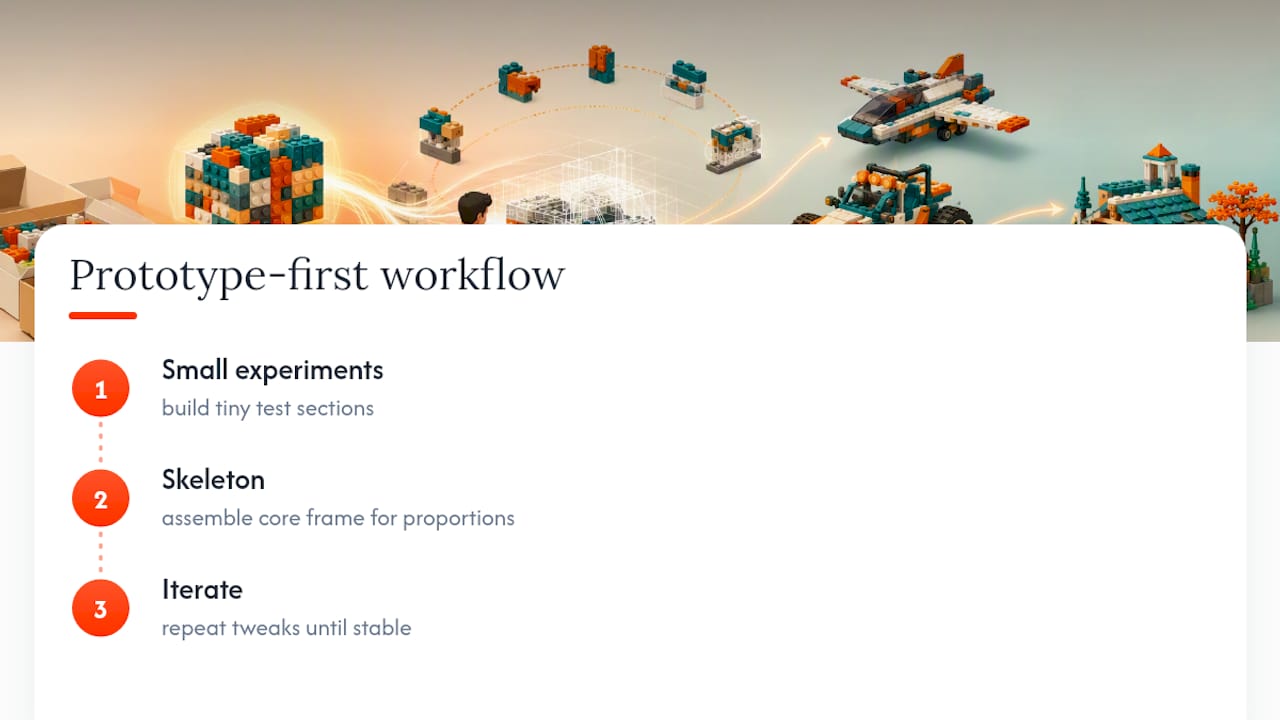
A designer building a large-scale Ent model described starting from small experiments, then building an internal skeleton and iterating repeatedly to get the proportions right. That’s the actual workflow professional MOC builders use, and it scales down perfectly to a weekend project.
Once the structure holds, fix your center of gravity by weighting the base, then finish with color-blocking so the eye reads shapes cleanly instead of a mess of mismatched studs. Photograph each stage as you go. It documents your process and gives you material to share later.
Which Sets Give You the Best Alternate Build Material?
Not every set is equally useful for alt-builds. Versatility comes down to a specific mix of parts, not piece count alone.
- Look for high ratios of plates, slopes, and small connector elements. These are the workhorses of any alt-build, and sets heavy on large specialized pieces (a single giant hull panel, for instance) give you less to work with.
- Mixed color palettes beat monochrome sets. A set with browns, tans, and greens supports far more creature and nature builds than one that’s mostly one color.
- Printed pieces add character but limit flexibility, since you can’t recolor or reposition a printed design element without breaking the illusion.
Creator 3-in-1 sets and Classic creative boxes consistently outperform themed single-model sets for this reason. They’re designed with variety baked in from the start.
When you’re missing a piece, decide early whether to substitute or buy the exact part. Color substitutions are fine for hidden internal structure but matter enormously on visible surfaces. Structural necessity (a specific hinge angle, a load-bearing beam) usually isn’t worth substituting around. Browsing a product page before buying lets you check exact part photos so you know what you’re getting.
Which sets work best for alternate builds?
Three sets stand out for builders looking to source new material specifically for alt-build projects.
- Lloyd Mech 71860 gives you a strong mix of armor plates, hinges, and joint pieces, which makes it a natural starting point for alternate mech or creature builds.
- Wing Starfighter 10046 carries wedge plates and angled panels that translate well into vehicle and sci-fi alternates beyond the original design.
- Adventuring Scale Down Treehouse 3040 brings organic-shaped pieces and earth-tone colors, which suit alter-sculpts and diorama work far better than a typical vehicle set.
Some sets ship with detailed building instructions and back compatibility claims so pieces fit as expected the first time. That matters more than it sounds. A misfit clutch power ruins structural integrity fast in an alt-build, where you’re already asking joints to hold shapes they weren’t originally designed for. Discounts are sometimes available at checkout, and product pages often show part photos before purchase, so you can confirm a set has what your project needs.
What the Data Actually Tells Builders to Prioritize
Most alt-build advice online focuses on finished photos, not process. That’s backwards. The builders who consistently produce working models treat prototyping as the actual skill, not an afterthought before the “real” building starts.
The Ent MOC workflow documented by BrickNerd makes this clear: small experimental sections, then a skeleton, then repeated iteration. That’s not a shortcut. It’s the entire method. Builders who skip straight to a finished vision usually rebuild the same section three or four times anyway, just without calling it a prototype.
Conventional advice tends to overweight piece count and underweight piece variety. A 2,000 piece set with ten repeated large panels gives you far less alt-build material than a 400 piece set stuffed with plates, slopes, and small connectors. Buy for variety before you buy for size.
If you’re starting today, prioritize inventory and prototyping over finding the perfect instructions. A rough prototype built from parts you already own teaches you more about proportion and structure in twenty minutes than an hour of scrolling through finished MOC photos ever will.
— Affordable
Where to Get Sets and Parts for Your Next Alternate Build
There are faster, cheaper ways to stock up on alt-build material than hunting secondhand marketplaces or paying collector markups for a single missing piece. Sets typically include detailed instructions and compatibility guarantees so parts fit correctly, and discounts may be available for certain groups at checkout.
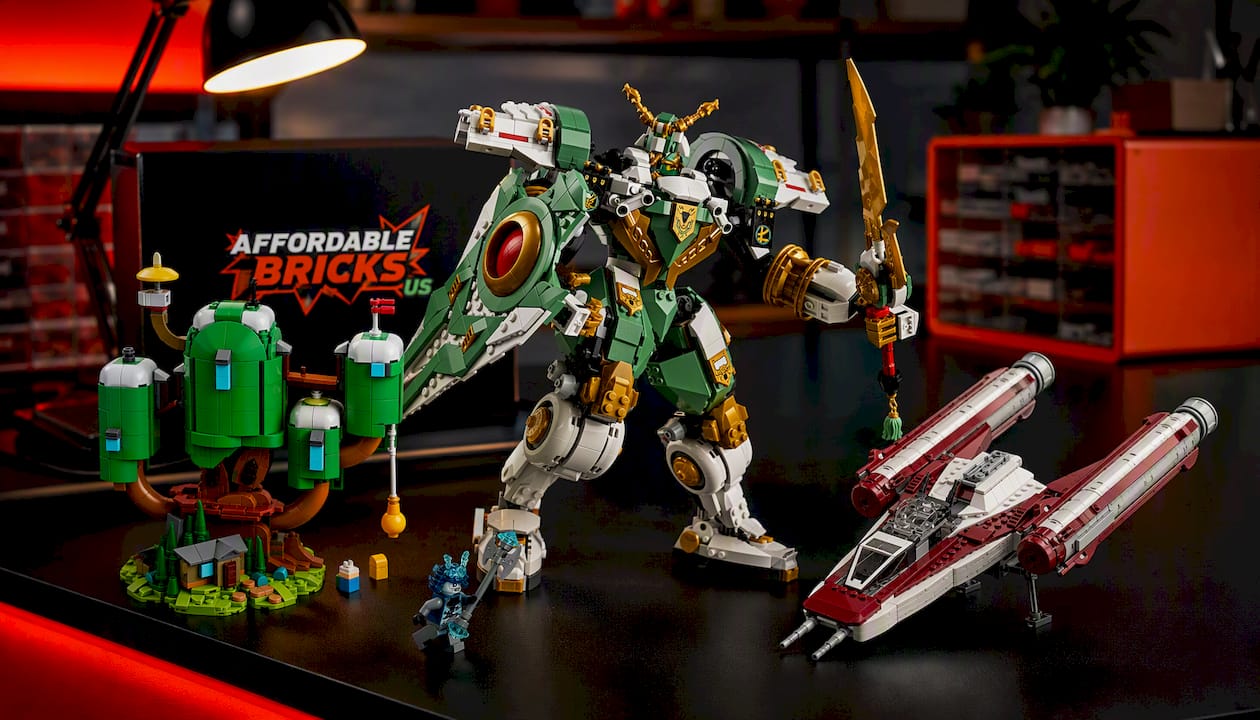
If you’re building mech-style creatures or vehicles, the Lloyd Mech 71860 gives you a strong base of hinges and armor plates to reshape. Want more variety to browse before committing? The full collection at Affordable Bricks covers replica sets, themes, and seasonal options, so you can pick a set based on what your next project actually needs. Check the product page, confirm the parts, and order what fills the gap in your bin.
Where to Keep Learning and Sharing Your Builds
Rebrickable remains the best hub for set-specific alternates and inventory matching. Brothers Brick and BrickNerd feature builder interviews and standout MOCs worth studying for technique. Brickit and similar apps make quick part scanning and prototyping far faster than digging through bins by hand.
Sources
- Rebrickable help — glossary
- Frugal Fun 4 Boys — LEGO building ideas
- A lush behemoth: bringing a LEGO Ent to life — BrickNerd
FAQ
What Counts as a LEGO Alternate Build?
An alternate build, often called an alt-build or MOC, uses only the parts from one official retail set, rebuilt into a different model with no additional pieces added.
Do I Need Instructions to Build an Alternate Model?
Not always. Simple, versatile concepts like vehicles and animals are often designed specifically to encourage experimentation without full instructions, so builders substitute and adapt as they go.
How Do I Find Alternate Builds for a Set I Already Own?
Search your set number on Rebrickable’s Find MOCs tool, or search YouTube using your set number plus “alt build,” which turns up video walkthroughs from other builders.
How much do sets typically cost?
Pricing varies by set and is listed directly on each product page at Affordablebricks.