Choose large Duplo-style bricks for toddlers, guided starter sets for early builders, and replica or collector kits for teens and adults. The real rule is simple: match complexity to attention span and theme to interest, not just to the number printed on the box. A peer-reviewed study even links early block play to stronger numeracy skills, which is one more reason to get this choice right.
TL;DR:
- For children under 2, choose oversized bricks without detachable small parts and simple pretend play themes; the AAP recommends avoiding choking hazards.
- For ages 6 and up, sets with 100 to 400 pieces and numbered bags support independent building; match build time to the child’s focus.
- After a child easily finishes builds with 100 pieces, try 200 to 300 pieces before moving to a set with 1,000 pieces.
- A child’s interests and patience can outweigh the age label, and readiness may differ by theme, so observe play before choosing a more complex build.
- Before buying an expansion, confirm that its scale and connector type match the base set; brand labels alone do not guarantee compatibility.
Table of Contents
- Ages 1.5+: Duplo and Large-Brick Starter Sets
- Ages 4+: Beginner Multi-Step Sets and Guided Builds
- Ages 6+: Independent Builders Ready for Multi-Part Projects
- Ages 9+: Complex Builds for Longer Attention Spans
- Ages 13+: Advanced Sets, Display Models, and Collectible Kits
- Ages 18+: Collector Sets for Adult Hobbyists
- How to Choose a Brick Set by Age and Interest
- Matching Sets to Your Child’s Personality, Not Just Their Age
- Helping Kids Move Up to Bigger, More Complex Builds
- Expansion Sets and Add-Ons That Grow With Your Child
- How Our Sets Compare to Official Options on Age Fit and Value
- Why Instruction Quality Shapes Age-Appropriate Play
- Find Your Child’s Next Build With Affordable Bricks
- FAQ
- Sources
Ages 1.5+: Duplo and Large-Brick Starter Sets
Toddlers need bricks sized for small hands and big enough to avoid choking hazards. The American Academy of Pediatrics recommends large pieces and toys that support symbolic play for children under 2, steering away from tiny accessories entirely at this stage.
At this age, play is about grasping, stacking, and pretend scenarios, not finished models. Here’s what to look for:
- Oversized bricks with no small, detachable decorations
- Simple sets built around pretend play, like a farm or a house
- Large-print instructions that an adult can follow at a glance
Our guide to Duplo compatibility breaks down which large-brick lines work together safely.
Ages 4+: Beginner Multi-Step Sets and Guided Builds
Four-year-olds can follow short sequences and build simple subassemblies, which opens the door to starter sets with a clear beginning, middle, and end. A set works best when the theme genuinely excites the child, since motivation often carries a young builder through steps that look tricky on paper.
- Pick a theme the child already loves: animals, vehicles, or simple rescue scenes
- Check the printed age label against actual piece count, not just the box art
- Stay nearby for the first independent build to answer quick questions
- Favor sets with large, clearly numbered steps over dense instruction booklets
Our space-themed set picks show how a strong theme can stretch a child’s patience further than expected.
Ages 6+: Independent Builders Ready for Multi-Part Projects
Six-year-olds are ready for sets with 100 to 400 pieces, often divided into numbered bags that guide them through one subassembly at a time. This is where real independence starts, and themes like STEM kits, vehicles, and animals tend to hold attention the longest.
- Look for numbered bags that break the build into manageable chunks
- Favor STEM, vehicle, or animal themes for sustained engagement
- Match expected build time to your child’s typical focus span
- Pair the finished model with a small shelf or drawer for display and storage
A dedicated storage system makes it easier to keep pieces sorted between sessions.
Ages 9+: Complex Builds for Longer Attention Spans
Nine-year-olds and up can handle intricate models that take more than one sitting to finish, and that’s a feature, not a drawback. A build that spans two or three sessions teaches patience and planning in a way a thirty-minute project never will.
- Expect higher piece counts and multi-session build times rather than a single afternoon.
- Choose advanced vehicles, detailed scenes, or STEM-based kits for the best fit at this age.
- Break larger projects into sessions by bag number, and store a model on a shelf once it’s done.
- Offer help only when asked. Letting a child solve a tricky step builds real confidence.
Ages 13+: Advanced Sets, Display Models, and Collectible Kits
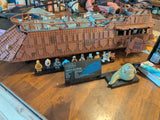
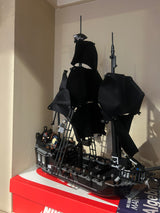
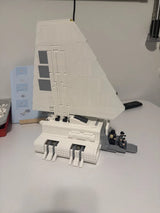
Teen and adult builders care less about play value and more about authenticity, instruction clarity, and how a finished piece looks on a shelf. A set in this bracket should read as a display model first and a toy second.
- Judge a set by its detail level and finish, not just its piece count
- Favor kits with crisp, well-organized instructions for a smoother build
- Our Retro Muscle Car 10304 suits builders who enjoy automotive detail and a classic silhouette
- Our Old Town Ninja Town 71861 fits fans of layered architecture and scene-building
- A small display stand or accent lighting turns either set into a gift that keeps giving after the last brick clicks in
Ages 18+: Collector Sets for Adult Hobbyists
Adult builders prize finish quality, build technique, and rarity over anything else. If you’re buying for an adult recipient, a quiet workspace and a few uninterrupted hours matter as much as the set itself.
- Choose rarer or more detailed replica kits over simpler options
- Set expectations for a longer build, sometimes spread across several evenings
- Mention that our large-print manuals and clutch-tested pieces make the build smoother, not just the finished look
- Ask about our veteran discounts if the recipient has served, since that can make a premium set more affordable
How to Choose a Brick Set by Age and Interest
A short checklist beats guesswork every time.
- Confirm the theme matches what the child already loves, whether that’s dinosaurs, race cars, or castles.
- Read the complexity signals on the box: piece count, number of bags, and any small parts that need supervision.
- Estimate build time honestly and compare it to how long your child sits still for other activities.
- Factor in storage and display space, since a finished model needs somewhere to live.
Pro Tip: Numbered bags aren’t just for organization. Pair them with large-print instructions and a child can often work through an early build with far less help than the box age suggests.
Matching Sets to Your Child’s Personality, Not Just Their Age
Age ranges are a starting point, not a rulebook. Two eight-year-olds can need completely different sets depending on temperament, patience, and what genuinely holds their attention.
A methodical child who likes following steps in order often thrives with a detailed vehicle or building set that rewards careful, sequential work. A child who gets bored easily does better with a themed set tied to an existing passion, since thematic motivation can carry a builder through steps that would otherwise feel like a chore. Development guidance from MSU Extension points out that matching interest to the build often matters more than the printed age range.
Watch how your child plays with other toys before you buy. A kid who lines up cars by color and size may enjoy a vehicle set with lots of small variations to sort and compare. A kid who builds elaborate pretend scenarios with action figures may get more out of a themed town or scene set than a single standalone model.
Siblings often need different approaches even at similar ages. One child might want to finish a build in one sitting and move on, while another wants to take a model apart and rebuild it five different ways. Neither approach is wrong, but it changes which set makes sense as a gift.
If you’re not sure, ask what the child has been drawn to lately, whether that’s a movie, an animal, or a type of vehicle. That one question usually points to a better set than the age label alone ever could.
Helping Kids Move Up to Bigger, More Complex Builds
Transitioning a child to the next complexity level works best as a gradual climb, not a sudden jump. A child who has mastered 100-piece builds with ease is usually ready for 200 to 300 pieces, not a 1,000-piece set that buries their confidence.

Watch for a few signs that a child has outgrown their current bracket. If they finish sets quickly and ask for “something harder,” or if they start combining pieces from different sets in creative ways, that’s a strong cue to size up. If they frequently lose interest partway through, the current complexity may already be a stretch.
When introducing a harder set, sit with your child for the first session rather than handing it over solo. Walking through the first bag together, pointing out how numbered steps work, builds the habits they’ll need for independent sessions later. After that first guided build, most kids can take on the next set in that complexity range with far less supervision.
Keep older, simpler sets around even after a child moves up. Revisiting an easier build on a tired afternoon, or mixing pieces from an old set into a new one, keeps the hobby feeling flexible instead of like a ladder they can only climb in one direction.
Expect some unevenness. A child might be ready for 9+ complexity in vehicle builds but still prefer 6+ complexity in detailed scene sets, and that’s normal. Complexity readiness tends to track the theme a child knows well, not just their age.
Expansion Sets and Add-Ons That Grow With Your Child
Expansion packs and add-on sets let a child build on a favorite model instead of starting over, and the right add-on depends heavily on age bracket.
For toddlers and early builders, simple add-on pieces like extra large bricks or a few themed figures work best. These extend pretend play without introducing pieces small enough to pose a risk. For 6+ builders, small expansion kits that add a vehicle, a building, or a creature to an existing scene keep a set interesting for months after the original build is finished.
Older builders in the 9+ and teen brackets often enjoy add-ons that increase detail rather than just adding bulk, like accessory packs that improve a vehicle’s interior or add lighting to a display model. For adult collectors, expansion sets that extend a scene or add a rare variant piece tend to hold the most appeal, since the goal is depth and authenticity over sheer size.
Whatever the age, check that an add-on is actually compatible with the base set before buying. Scale and connector type matter more than brand labeling, and a mismatch can turn an exciting gift into a frustrating one.

How Our Sets Compare to Official Options on Age Fit and Value
When you’re weighing age appropriateness and price, the comparison usually comes down to three things: instruction quality, part consistency, and cost per set.
We build every listing around the same age-bracket logic covered throughout this guide, so a toddler set is sized and labeled the same way you’d expect from any trusted brick source. Where we differ is price. Our Replica Sets, Themes, and Seasonal kits are priced to make premium, hard-to-find builds accessible without the markup collectors often pay elsewhere.
Instruction clarity is where we put extra effort. Every set ships with instructions designed to be followed without guesswork, and our large-print instruction option makes builds easier to follow for low-vision builders of any age. That matters most in the 6+ to 13+ range, where kids are building with less supervision and need instructions that hold up on their own.
Part fit is the other piece of the age-appropriateness puzzle. A set that’s technically rated for a given age but ships with pieces that don’t click together firmly creates frustration regardless of the label. Our 20 Minute Brick Quality Test checks clutch strength on every batch, so the pieces in an 8-year-old’s hands fit the way they’re supposed to.
Why Instruction Quality Shapes Age-Appropriate Play
We built our catalog around one belief: an age label only works if the instructions and the parts actually hold up at that age. Our 20 Minute Brick Quality Test checks every batch for consistent fit, and our large-print instructions make builds accessible to a wider range of builders, including those with low vision.
Discounts are extended to military veterans as a way of saying thank you to the community that supports this customer base. Every set in our catalog is chosen with a specific age and skill level in mind, not just a generic range pulled from a box.
— Affordable Bricks Editor
Find Your Child’s Next Build With Affordable Bricks
Once you know the age bracket and theme that fits, finding the right set shouldn’t take hours of searching. We stock premium, hard-to-find replica and themed kits priced to make building accessible, with every set checked for part fit and shipped with instructions that are easy to follow.

- Our Retro Muscle Car 10304 is a strong pick for teens and adults who love automotive detail and display-worthy builds.
- Our Old Town Ninja Town 71861 suits builders drawn to layered scenes and architectural detail.
- Browse our full vehicles collection for more age-appropriate picks across skill levels.
Every order ships with clear instructions, including a large-print option, and veterans receive a dedicated discount at checkout. If you’re planning a brick set as a party favor or celebration gift, loot bags by age from our partner can round out the gift with age-matched extras. Start browsing our full catalog to find the next build your child is ready for.
FAQ
What age is appropriate for a Duplo-style brick set?
Duplo-style sets with large pieces are appropriate starting around 1.5 years old, based on AAP guidance on avoiding small parts for children under 2. Look for sets built around pretend play rather than detailed models at this stage.
Should I buy a set above my child’s printed age range?
Sometimes, yes. Research on toy selection notes that a strong thematic interest can motivate a child to successfully complete a build above the printed age range, so motivation often matters more than the exact birthday.
How many pieces should a 6-year-old’s set have?
Sets with a moderate number of pieces tend to fit 6-year-old builders well, especially when pieces are divided into numbered bags. Piece count alone isn’t a perfect guide, so also consider how long your child typically stays focused on a single activity.
Does block building actually help with learning?
A peer-reviewed study found a positive association between block construction skills and early numeracy in preschool-age children, with a notably stronger link for children from lower-income households. Building sets can double as both play and an early math-skills tool.
What should I look for in a set for a teen or adult builder?
Teen and adult builders tend to value authenticity, detailed instructions, and a finished look that works for display rather than play. Our Retro Muscle Car 10304 and Old Town Ninja Town 71861 are both built with that kind of builder in mind.
Sources
- Healthychildren
- Building numeracy skills: associations between DUPLO® block construction and numeracy in early childhood
- Choosing developmentally appropriate toys (MSU Extension)