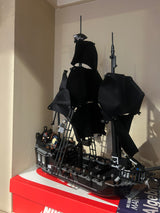
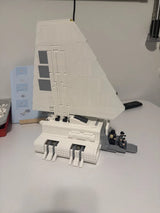
You can avoid a scam brick store by checking five things before you pay: the price against the real market, the payment methods offered, the reviews outside the store’s own site, the business details, and the return policy. A store that fails two of these should not get your card number. Below are nine checks that take about ten minutes, plus what to do if you already paid.
TL;DR
- Prices of 50% to 80% off are the most common sign of a fake brick store. If a $100 set is listed at $20, walk away.
- Pay by credit card. Gift cards, wire transfers, payment apps and crypto are very hard to get back.
- Do not trust star ratings alone. Look for reviews with real details, posted on different dates, on sites the store does not control.
- Never make a small “test purchase” on a store you doubt.
- If you were scammed, call your card issuer first, then report it at ReportFraud.ftc.gov.
Table of Contents
- Why brick shoppers get targeted
- Nine checks before you order
- Quick comparison: safe signs and warning signs
- Our perspective on brick quality and trust
- What a legitimate brick store looks like
- Shop with us
- What to do if you already paid a scam store
- FAQ
- Sources
Why brick shoppers get targeted
LEGO and LEGO-compatible sets are popular gifts, and retired or hard-to-find sets sell at high prices. That makes a perfect bait: a rare set at a “rescue” price. Fake stores copy product photos, logos and layouts, then advertise on social media.
The numbers back this up. The FTC reported that consumers lost $2.1 billion to scams that started on social media in 2025, and online shopping scams were the most reported type. The median loss for an online shopping scam was $102. Over 40% of people who lost money to a social media scam had ordered items they saw in ads.

That $102 is about the price of one mid-size set. It is also the amount most people think is “not worth worrying about” until it is gone.
Security researchers describe the same pattern for toy brands. Bitdefender’s guide to LEGO scams lists fake webstores as one of the biggest threats to families, and says they often borrow real logos, theme images and fan-style layouts.
Nine checks before you order
1. Compare the price to the real market
This is the fastest filter. Real sellers have costs. A new set at half price or less is not a sale, it is bait. Most scam sites advertise 50% to 80% off to pull in bargain hunters, and LEGO itself warns that very low prices are a lure.
Lower prices are not always a scam. Honest LEGO-compatible stores can be cheaper than the original brand because they sell a different product. The test is whether the price makes sense for what is described. A compatible set that is clearly labeled as compatible, at a lower price than the original, is a different thing from a listing that claims to be a genuine retired set at 80% off.
2. Read the whole site, not just the product page
Spend time on the pages scammers rush. LEGO’s own advice is to look for incorrect language, fake customer service addresses, and missing return or privacy terms. Check these:
- An About page that names a real city and a real business
- A returns policy with clear time limits
- A privacy policy and terms that are not copied from another store
- A working phone number or contact email, and a reply when you test it
- Spelling and grammar that look consistent across the whole site
If you call and the number does not exist or nobody answers, that is your answer.
3. Look at how the store asks you to pay
How someone asks for payment says a lot. The FTC advises paying by credit card, not gift cards, wire transfers, payment apps or cryptocurrency, because credit cards give you legal dispute rights for items that never arrive or charges that are fraudulent. Paying with a gift card, crypto or a wire is like sending cash, and it generally cannot be recovered.
A store that offers only Zelle, gift cards or “friends and family” payments is not a store. Leave.
4. Check reviews the store does not control
Star ratings are easy to fake, and AI makes fake reviews more convincing. The BBB says to watch for generic reviewer names, many reviews posted in a short window, and reviews with no detail about what was bought. A site with no reviews at all deserves extra caution.
Good reviews mention specifics: the set name, how the pieces fit, how long shipping took, how support handled a missing part. Search for the store name on its own, then with the word “scam” next to it. The FTC suggests researching the company and searching its name with “scam” before you buy.

5. Be careful with ads and social media offers
Many fake stores reach you through a sponsored post or a marketplace listing. Do not buy from the ad directly. Type the store’s name into a search engine, read the results, and only then visit the site. If the ad promises a deal and the site has no history, treat it as new and unproven.
This matters most around the holidays, when deal pressure is high and countdown timers are common. A timer that resets every time you reload the page is a warning sign.
6. Watch for stock photos only
Scam listings often use only manufacturer or stock images. Honest sellers can use them too, but a store that has real photos of the box, the parts and the built model shows it has the product in hand. For rare sets, ask for a photo of the actual item before paying.
7. Be wary of peer-to-peer sellers
Individual sellers on marketplaces and social groups can be great, and they can also be fake. On peer-to-peer brick marketplaces there is usually no central buyer protection fund, so you rely on the seller’s feedback history and your payment provider. The BrickLink help page says to try to resolve the problem with the seller first before using other options. Refuse any seller who asks you to pay outside the platform.
Signs of a weak listing: many items with the same copied description, a brand-new account, and pressure to move to a private chat.
8. Never do a “test purchase”
It feels safe to spend $5 on a store you doubt. It is not. Beyond losing the money, you hand over your card data, and scammers can use a single small transaction to try carding, which is high-volume fraudulent use of stolen card details on other sites. If you doubt a store, close the tab.
9. Don’t click shipping texts
After you buy, scammers may send a text saying your package is stuck in customs or needs a small redelivery fee. The FCC says official carriers do not send unsolicited texts asking for payment. Track your order from the carrier’s own website or app, or from the store’s order page, never from a link in a message.
Quick comparison: safe signs and warning signs
| Check | Safer sign | Warning sign |
|---|---|---|
| Price | Close to market for the type of set | 50% to 80% off a popular or rare set |
| Payment | Credit card, clear checkout | Zelle, gift cards, crypto, wire |
| Reviews | Detailed, varied dates, found off-site | Generic names, posted in a burst, or none |
| Business info | Real address, working contact, reply to test email | No address, dead phone, copied policies |
| Policies | Clear returns and shipping terms | Missing or vague terms |
| Photos | Real product photos and clear instructions | Stock images only |
| Pressure | Honest sale dates | Endless countdown timers |
Our perspective on brick quality and trust
We run a store that sells LEGO-compatible sets, so we see this problem from both sides. Shoppers who have been burned once are right to be careful, and that includes being careful with us. Here is what we think a trustworthy brick store should show you.
First, it should be honest about what it sells. LEGO-compatible sets are not the original brand, and a good store says so. If you want to understand where the legal line sits, we wrote about why the 1978 patent is no free pass for LEGO alternatives.
Second, the product should work. Compatibility is the whole point of a compatible set. That means tight tolerances and good clutch. We explain what to measure in our posts on brick tolerances and a 20 minute brick quality test you can run on any set, ours included.
Third, bundles should be clear. If a listing is vague about what is inside, you may end up with mystery parts. Our checklist for brick set bundles covers five checks to run first.
Finally, the store should give you detailed building instructions and stand behind fit. That is what we focus on: better quality control on compatibility and instructions, and attentive customer service. We also give discounts to military veterans and first responders.
— Affordable Bricks Editor
What a legitimate brick store looks like
Use this list as a standard for any store, including ours:
- A clear identity. The business name, location and contact details are easy to find. We are based in Long Beach, CA.
- Straight talk about the product. Compatible means compatible, not a disguised original.
- Instructions included or clearly described. You should know what you get before you open the box.
- Tested quality. Color match and plastic stability matter, especially for display builds. See our notes on color variance and ABS plastic UV stability.
- Normal payment options at a normal checkout.
- Support that answers. Send a question before you buy and see how fast and how specifically they reply.
Shop with us
If you want sets at an accessible price from a store with a real team behind it, start with our Replica Sets, Themes and Seasonal collections, or browse Vehicles. You will find hard-to-find models, themed kits and holiday sets, with detailed building instructions.
Military and first responders: you get a discount. See how verification works in Verify in Minutes. Buying for someone else? There is also a digital gift card.

What to do if you already paid a scam store
Act fast. Time matters for disputes.
- Contact the seller to ask for a refund or delivery. The California Department of Justice says this is the first step when a purchase goes wrong.
- Call your credit card issuer and file a chargeback or dispute right away if the seller does not fix it.
- Report it at ReportFraud.ftc.gov and to the Better Business Bureau. Reports may not return your money, but they help authorities see patterns and protect others.
- Watch your accounts. If you gave card details to a site you now doubt, ask your issuer about replacing the card.
- Ignore follow-up texts and emails from the store or from “recovery services.”
If you paid with a gift card, wire or payment app, tell the company that handled the payment straight away. Recovery is less likely, but reporting is still worth it.
FAQ
How can I tell if an online brick store is legitimate?
Check the price against the market, read the policies, confirm a real address and contact method, and look for detailed reviews on other sites. Search the store name plus “scam.” If it only accepts unusual payment methods, do not buy.
Is a very cheap LEGO-compatible set always a scam?
No. Compatible sets can cost less than the original brand because they are a different product. Be worried when a store claims to sell genuine sets at 50% to 80% off, or when the price is far below what the store’s own product type should cost.
What is the safest way to pay?
A credit card. The FTC says cards give you legal protections to dispute undelivered items or fraudulent charges. Avoid gift cards, wire transfers, payment apps and crypto for new stores.
Can I trust reviews on a store’s own site?
Use them as one clue only. The BBB notes that fake reviews are getting more convincing, so look for specifics, varied dates and real names, and check outside sources too.
Sources
- TechCrunch: Consumers lost $2.1B to social media scams in 2025, FTC reports
- FTC: Online shopping
- FTC: Scams and ReportFraud
- BBB: How to spot a fake review
- FCC: How to identify and avoid package delivery scams
- California Department of Justice: Online purchases
- LEGO: How to spot a fake LEGO webstore
- Bitdefender: How LEGO scams target families online
- BrickLink Help Center
- Affari da Nerd: Truffe sui LEGO